Pet Health

Enhancing Veterinary Dental Extractions: Advanced Techniques and Tools

In the evolving landscape of veterinary dental care, the pursuit of more efficient and less invasive tooth extraction methods is paramount. This article consolidates advancements in techniques and instrumentation, aiming to transform a procedure often associated with brute force into one characterized by precision and improved patient welfare. By understanding the intricate structure surrounding a tooth, veterinary professionals can employ targeted strategies that mitigate trauma and enhance recovery.

Revolutionizing Dental Extractions: Precision Tools and Techniques

The foundation of successful tooth extraction lies in a thorough understanding of the periodontium, the complex support system anchoring the tooth to the jawbone. Comprising cementum, alveolar bone, gingival connective tissue, and millions of collagen-rich periodontal ligament fibers, this structure necessitates careful management during removal. The goal is to either sever or tear these fibers efficiently to release the tooth from its socket.

Initial steps often involve the delicate detachment of gingival connective tissue using specialized blades, such as the 15C scalpel, or periosteal elevators. These instruments are crucial for creating releasing incisions and elevating mucogingival flaps with precision, particularly when sharpened appropriately.

Winged dental elevators, sometimes known as Wiggs elevators, are designed with slender wings that can gently insinuate themselves into the periodontal ligament space. Once positioned, a controlled rotation of the instrument leverates the tooth, stretching and tearing the periodontal ligament fibers. While effective for some teeth, more stubborn cases often call for the nuanced approach offered by dental luxators.

Luxators represent a significant leap forward, acting more like miniature surgical blades than traditional elevators. Instead of relying on leverage and twisting, luxators are inserted into the periodontal ligament space and moved with a side-to-side, 'windshield wiper' motion. This action precisely severs the ligament attachments, prioritizing technique over sheer force. Given their thin and delicate nature, frequent sharpening or replacement of luxator blades, or the use of modular blades, is essential to maintain their effectiveness and prevent damage. Safety is paramount when handling these sharp instruments; maintaining an extended index finger along the shaft acts as a crucial stop, preventing accidental injury if the instrument slips.
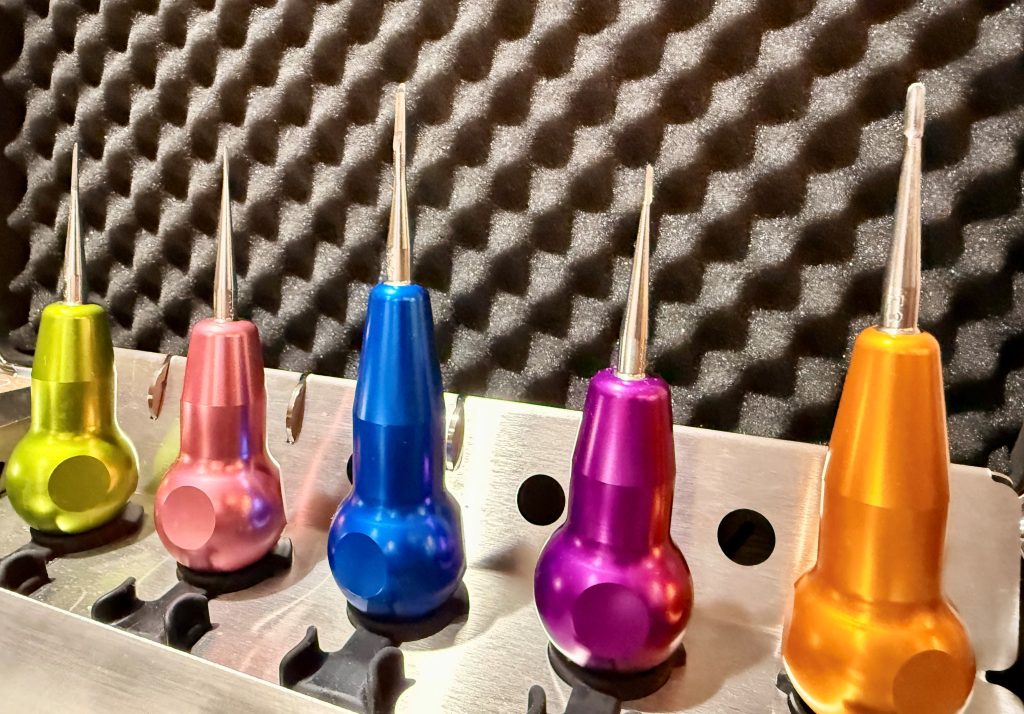
A set of dental luxators and elevators with interchangeable blades.

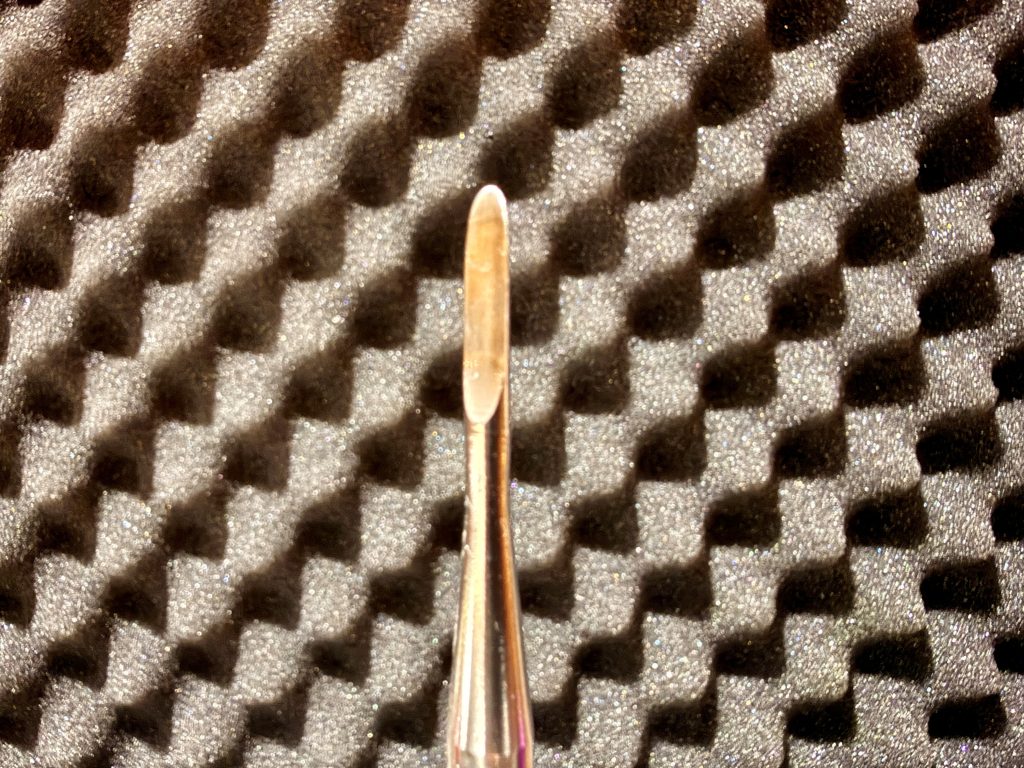
A 4 mm luxator blade. Note the very thin profile, designed to fit into a 250-micron-wide periodontal ligament space.

For the most challenging extractions, veterinary dentists increasingly turn to advanced instruments such as automated periotomes and piezosurgical units. Automated periotomes, functioning like miniature jackhammers, drive thin blades into the periodontal ligament space. However, their use is contraindicated in cases of ankylosis due to the risk of tip breakage. Piezosurgical units, a revolutionary technology adopted from human oral surgery, utilize ultrasonic vibrations to precisely cut bone without damaging soft tissues. While primarily used for procedures like maxillectomies and mandibulectomies, they prove invaluable for difficult extractions, especially where ankylosis is present, allowing for precise detachment of periodontal connections up to 10 mm deep.

High-speed burs with elongated shafts and fine working ends are another indispensable tool. The 'moat technique,' which involves creating a circular channel around a root with a tiny, round bur and removing buccal bone to create a window, has largely replaced older, more aggressive methods. This allows for the gentle prying out of the root using small instruments like a luxator or a Davis root tip elevator. The ¼ surgical length round bur is particularly favored for its precision, though its delicate nature necessitates single-use in many practices to prevent breakage.

Each successful extraction, where millions of periodontal ligament fibers are meticulously overcome, stands as a testament to the evolving skill and dedication of veterinary dental professionals. These refined techniques and specialized instruments not only streamline the procedure but also significantly contribute to the comfort and recovery of animal patients.

The advancements in veterinary dental extraction techniques offer profound benefits for animal welfare. Moving beyond traditional, more forceful methods, modern approaches prioritize precision, minimize tissue trauma, and enhance recovery. This evolution underscores a commitment to providing the highest standard of care, ensuring that even complex dental procedures are performed with the utmost gentleness and effectiveness. For veterinary professionals, embracing these innovations means not only improving patient outcomes but also elevating the art and science of veterinary dentistry.

RECOVER Initiative Unveils New First Aid Guidelines for Dogs and Cats

The RECOVER Initiative has unveiled its 2026 First Aid Guidelines, providing veterinary professionals and pet owners with a comprehensive, evidence-based framework for handling common pet emergencies. This groundbreaking set of recommendations aims to standardize immediate care for dogs and cats, ensuring that actions taken in the crucial minutes before professional veterinary intervention are effective and beneficial.

Empowering Pet Owners: Mastering the Crucial First Minutes of Emergency Care

The Imperative for Standardized Pet First Aid: Bridging Knowledge Gaps in Emergency Responses

When a pet faces a sudden health crisis, owners often find themselves in a challenging situation, making quick decisions based on instincts or anecdotal advice. This article highlights the new RECOVER First Aid guidelines, meticulously developed to provide clear, evidence-based instructions for pre-veterinary care. These guidelines fill a critical void, ensuring that initial responses are effective, timely, and do not inadvertently cause harm or delay essential professional treatment. They serve as an invaluable resource for veterinary teams, empowering them to educate pet owners on appropriate actions during emergencies.

Revolutionizing Allergic Reaction Management: Differentiating Treatments for Mild Reactions and Anaphylaxis

The new guidelines clearly distinguish between uncomplicated allergic reactions and life-threatening anaphylaxis, emphasizing different treatment approaches. For mild allergic responses, oral antihistamines are recommended to reduce progression risks. However, for severe anaphylaxis, characterized by respiratory distress or collapse, immediate administration of epinephrine is crucial, while antihistamines are deemed insufficient and can cause delays. This nuanced approach ensures that pets receive the most effective treatment based on the severity of their condition, highlighting the critical role of prompt and accurate assessment.

Revisiting Toxin Ingestion: Discarding Hydrogen Peroxide for Safer, More Effective Interventions

A significant shift in pre-hospital care for toxin ingestion is introduced, advising against the routine use of hydrogen peroxide to induce vomiting. Citing human studies and evidence of gastrointestinal harm in pets, the guidelines advocate for immediate transport to a veterinary facility, emphasizing that induced vomiting often delays more effective treatments like activated charcoal and can cause further injury. This change redirects pet owners from potentially harmful home remedies to prompt professional care, ensuring safer and more effective management of poisoning cases.

Combating Heatstroke Effectively: Prioritizing Immediate Cooling Before Transportation

The guidelines introduce a critical shift in managing heatstroke: immediate on-scene cooling before transporting the animal. This approach emphasizes that prolonged high body temperatures worsen outcomes, making initial cooling efforts paramount. Recommendations include using cool, running water on thinner fur areas, avoiding full immersion due to safety risks, and continuing until the body temperature decreases significantly. This proactive cooling strategy aims to mitigate severe organ damage and improve survival rates, underlining the importance of early intervention in heat-related emergencies.

Managing Hypoglycemia Safely: Strategic Sugar Administration and Critical Safety Warnings

For pets experiencing hypoglycemia, the guidelines recommend applying viscous simple carbohydrates to the buccal mucosa to quickly raise blood glucose. This method, which allows for absorption through the oral lining, offers a temporary solution to stabilize the pet. Crucially, strict safety protocols are outlined: never administer anything by mouth to a seizing animal, and prioritize provider safety to avoid bites. This immediate intervention can buy precious time but must always be followed by prompt veterinary assessment and definitive treatment to prevent life-threatening complications.

Addressing Choking Incidents: Prioritizing Back Blows and CPR for Airway Obstructions

The guidelines introduce a revised approach to choking in conscious pets, prioritizing up to five firm back blows over abdominal thrusts due to evidence of higher efficacy and lower risk of injury. If back blows fail, other maneuvers can be attempted, but blind finger sweeps are strictly prohibited. For unconscious animals, immediate chest compressions are recommended, as they can dislodge obstructions and are more effective than abdominal thrusts in this state. These updated protocols aim to provide safer and more effective interventions for airway emergencies.

Integrating Guidelines into Veterinary Practice: Enhancing Client Education and Emergency Preparedness

Implementing the new RECOVER First Aid Guidelines requires a multi-faceted approach within veterinary practices. This includes streamlining telephone triage with concise instructions, providing targeted education during medication dispensing (e.g., insulin or epinephrine), conducting regular team training on updated CPR and first aid protocols, and offering community education through accessible materials. The ultimate goal is to equip pet owners with the knowledge and confidence to act effectively during emergencies, ensuring both pet and provider safety while emphasizing that first aid is a bridge to, not a replacement for, professional veterinary care.

See More

The Art of Compassionate Communication in Veterinary Practice

In the demanding world of veterinary medicine, effective communication often proves as critical as the medical treatment itself. A young veterinarian, early in his career, encountered a case that would fundamentally reshape his understanding of client interaction. This pivotal experience involved an elderly Labrador named Tom, suffering from a decubital ulcer, and his owners—a kind woman and her husband, who was battling Parkinson's disease. Initially, the veterinarian's approach was textbook: clear explanations and agreed-upon plans. However, the husband's presence, marked by his imposing stature and a face devoid of easy expression, led the vet to rush his explanations, inadvertently creating a barrier despite his best intentions. This early struggle highlighted a common pitfall: the perception of being hurried can erode client trust, even when medical competence remains high.

As Tom's wound stubbornly resisted conventional treatments, the veterinarian faced mounting frustration and self-doubt. Despite trying various advanced methods and seeking specialist advice, the ulcer worsened, and the dog's owners, unwavering in their faith, continued to insist on his care. Each interaction with the silent, imposing husband became a source of anxiety, prompting the vet to deliver increasingly technical and rushed updates. This period of prolonged struggle underscored a crucial lesson: the importance of slowing down and genuinely connecting. It wasn't until the veterinarian, humbled by his lack of progress, abandoned his pretense of authority and admitted his uncertainty to the wife that a shift began. This vulnerability, paradoxically, strengthened the bond of trust and paved the way for a more open, honest dialogue, particularly with the husband who had remained an enigma.

The turning point arrived when the veterinarian, finally shedding his hurried demeanor, spoke to the husband with genuine honesty and empathy about Tom's precarious condition. This unvarnished, slow-paced conversation, devoid of forced optimism, finally allowed a true connection to form. Miraculously, shortly after this shift in communication, Tom's wound began to heal. The eventual recovery not only saved the beloved dog but also profoundly impacted the veterinarian, who witnessed firsthand the power of patient, empathetic communication. The simple, heartfelt "thank you" from the once-impassive husband, accompanied by a delicate handshake, became a testament to the transformative effect of slowing down, listening, and truly seeing the client beyond their immediate needs. This experience underscored that genuine human connection, built on patience and understanding, is an indispensable element of healing and care.

This journey profoundly illustrates that true professional excellence extends beyond technical proficiency; it encompasses the art of empathetic engagement. In every field, especially those dedicated to well-being, fostering trust through genuine, unhurried interaction is paramount. When we take the time to truly connect, to listen with our hearts as well as our minds, we not only deliver better service but also create an environment where healing, understanding, and mutual respect can flourish. This compassionate approach elevates the human experience, transforming challenges into opportunities for deeper connection and ultimately, greater positive impact.

See More